…
The new EPBD is on its way. Now is the time to modernise buildings intelligently.


s meet EPBD requirements with STEINEL solutions.

The new EU Energy Performance of Buildings Directive (EPBD) sets out a new framework for residential and non-residential buildings in Europe. Issues such as energy efficiency, digitalisation and the modernisation of building services are becoming increasingly important.

STEINEL supports owners, planners and businesses with intelligent sensor technology, automated lighting control and connected solutions, helping them to develop their buildings in line with their needs and to meet the latest requirements for building operations.

What is the EPBD? The new EU Buildings Directive explained simply

The ‘Energy Performance of Buildings Directive’ (EPBD) is the European directive aimed at improving the energy efficiency of buildings. The revised directive came into force in 2024 and must be transposed into national law by May 2026.


The main objectives of the EPBD:

  • A climate-neutral building stock by 2050
  • Higher energy efficiency in new and existing buildings
  • Gradual introduction of zero-emission buildings
  • Digitalisation and smart building control
  • Reducing energy consumption and running costs
An urban district of a major city.
New challenges. New opportunities.

What does this mean for building owners?

The EPBD applies equally to property owners, housing associations, local authorities and commercial property operators.What property owners need to be prepared for:

  • In future, buildings must be operated in a more energy-efficient and data-driven manner
  • The use of building automation will be significantly expanded
  • A building automation system (BACS/BMKS) will become mandatory for buildings with higher energy consumption 
  • Digital solutions such as sensor technology, monitoring and smart lighting control will become a key factor for success

Significant potential through the renovation or modernisation of existing properties

64%

of buildings in the EU are more than 25 years old and have poor energy efficiency.

40%

of the EU’s total energy consumption occurs in the buildings sector.

Equipped for the next steps with STEINEL solutions.

Regulatory requirements for buildings are constantly evolving. These include, amongst other things, guidelines on monitoring indoor climate parameters and on the automated control of building services. Early planning can help to ensure that the necessary adjustments are implemented in a structured manner.

With sensor technology, data management and networked lighting control, STEINEL supports property owners, housing associations, local authorities and commercial property operators in meeting the latest requirements for modern, needs-based building management.
A timeline summarising the key milestones of the EPBD
grp-epbd-kleine+teaser-sensoren.png.jpg
Next-generation sensors

Modern multi-sensors collect various building data in real time, going beyond mere motion detection. They can provide information on occupancy, brightness, temperature, humidity or the use of individual areas. The data collected forms the basis for the control and analysis of building functions.

On this basis, lighting, heating and air conditioning can be controlled according to demand. Furthermore, the data enables an analysis of space utilisation and can help to optimise operational processes and identify opportunities for energy use tailored to demand.

grp-epbd-kleine+teaser-connected+lighting.png.jpg
Connected Lighting

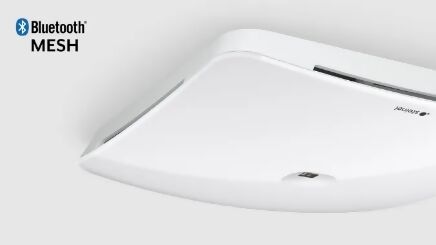
Connected Lighting combines sensor technology and lighting control to form a single, intelligent system. Networked lighting solutions enable the lighting to be automatically adjusted according to occupancy, daylight levels and usage patterns. This allows the lighting to be controlled as required and tailored to changing needs within the building.

Particularly in office buildings, educational establishments, car parks and municipal properties, these functions lay the foundation for the optimised operation of lighting systems. At the same time, they help operators to tailor energy consumption, comfort and building management specifically to actual needs.

Insight into the Capstone visualisation of the measured data
Everything you’ve always wanted to know about your building.

Capstone® – customised visualisation

By collecting and analysing environmental data such as temperature, humidity, CO₂ levels, VOCs, smoke, noise and occupancy signals, buildings can become not only more energy-efficient, but also more comfortable and safer. The new Capstone® software solution makes it possible, for the first time, to detect and visualise all IP and Bluetooth sensors as well as lights on the network, providing a complete overview of the building’s status. Based on this data, optimisation recommendations for better use of space can be generated.

Open, flexible and EPBD-compliant with STEINEL

STEINEL is firmly committed to open interfaces and maximum compatibility – a decisive advantage in the context of the new EPBD requirements. Thanks to its own gateways, STEINEL solutions can be seamlessly integrated into the most common building automation systems, including KNX, DALI-2, BACnet and MQTT. For designers and operators, this means that existing systems can continue to be used and intelligently expanded without having to rely on proprietary, isolated solutions. At the same time, the building infrastructure remains future-proof and scalable, enabling it to meet increasing demands for energy efficiency, monitoring and automation.
A man is standing by a large glass front in a state-of-the-art building.

Lighting: The underrated tool for saving energy

With intelligent sensor solutions and networked lighting control, STEINEL supports the implementation of current requirements for modern buildings. Connected Lighting combines sensor technology, LED lighting, networking and automated control into an integrated system for lighting management.

By combining these technologies, lighting can be adapted to occupancy, daylight conditions and usage scenarios. This allows lighting to be controlled according to need and the operation of lighting systems to be adapted to the actual requirements within the building.

The combination of sensor technology, LED technology and intelligent control lays the foundation for needs-based building operation and helps operators identify potential improvements in terms of energy consumption, user comfort and building management.

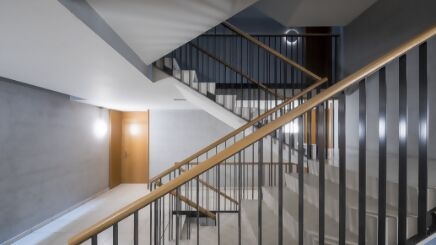
A stairwell in a block of flats fitted with Connected Lighting luminaires from Steinel
A portrait of a Steinel employee smiling at the camera
Make your building ready to meet tomorrow’s requirements.

Would you like to find out how smart sensor technology and connected lighting can help adapt your building to current requirements? Our experts will provide you with personalised advice on suitable STEINEL solutions – from multi-sensor technology and networked lighting control to concepts for the demand-driven operation of lighting and building systems. Together, we develop solutions for the housing sector, local authorities and commercial property that are tailored to the relevant technical and regulatory requirements.